 Hawaii Photoshoot
What to Wear for a Photoshoot in Hawaii
Nobody regrets the outfit that moved in the wind. What people regret is white linen on white sand, a print that fought the ocean behind it, and shoes that made a beach walk into an ordeal. Hawaii gives a photographer four backdrops with very different tonal problems, so what to wear for a photoshoot in Hawaii is decided by the one you are booked at. This page gives you a colour table by backdrop, the fabrics that behave in trade winds, a short list of what to leave in the case, and a checklist to run the night before. The sessions themselves sit on the Hawaii photoshoot catalog.
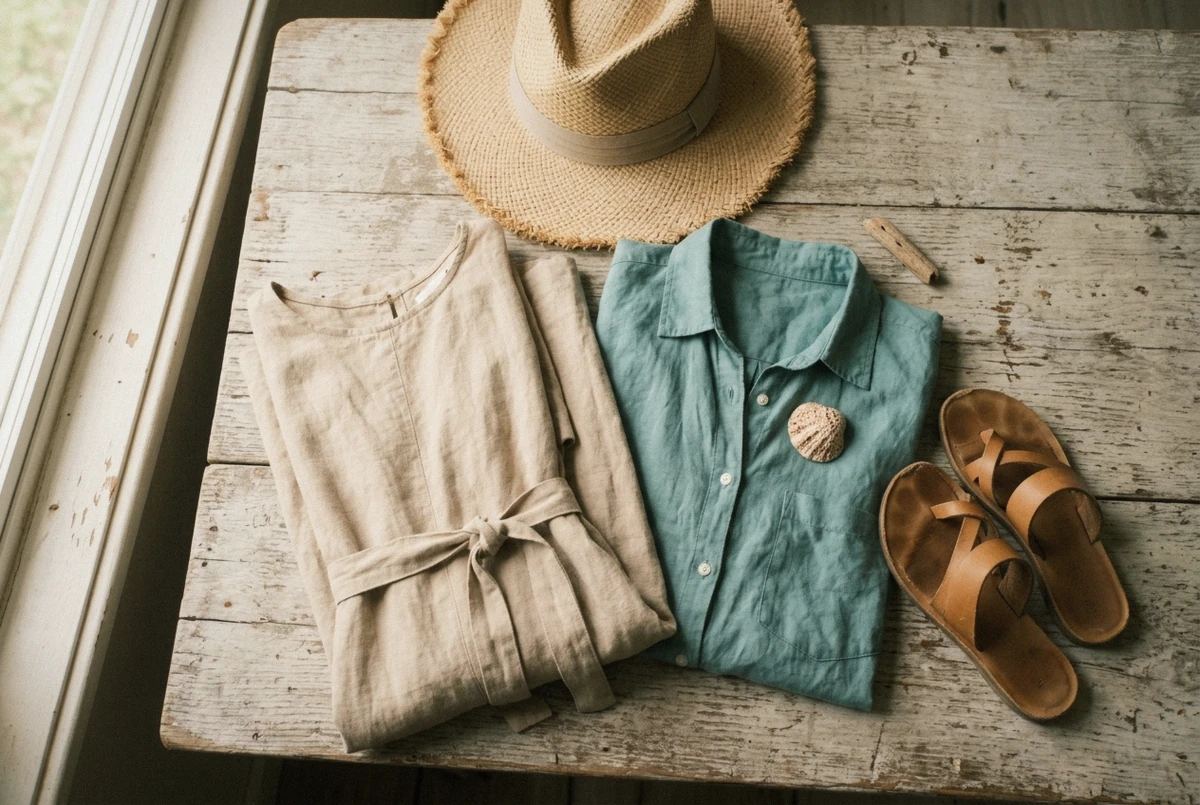
Solid colours, natural fabric, footwear you can walk on sand in. Most of the decision is made here.
Quick answer
Wear solid colours in fabrics that move: linen, cotton gauze, light jersey, anything with a long hem or sleeve that catches the wind. Match the palette to the backdrop rather than to each other, because white sand, black lava, green ridge and sunset water each eat a different colour. Bring footwear you can walk on sand in, and a layer for a sunrise start on the windward coast, where six in the morning is cooler than the forecast implies.
Key takeaways
- White on white sand is the single most common mistake, and it flattens everyone in the frame
- Prints compete with the ocean; solids let the location do the work
- Coordinate two or three tones across a group instead of matching outfits
- The 30-minute sessions leave no time for a change, so choose once and choose well
Colour, Backdrop by Backdrop
Hawaii's four common backdrops sit at different points on the tonal scale, and the same dress reads very differently against each. Book your beach first, then pick the palette.
| Backdrop | Where | Works | Avoid |
|---|---|---|---|
| White sand and turquoise | Lanikai, Kailua, Waikiki | Warm neutrals, sand, terracotta, deep teal, navy | White, pale grey, ice blue |
| Black lava and gold sand | Wailea, Olowalu, Kona coast | White, cream, coral, saffron, soft pink | Black, charcoal, dark brown |
| Green ridge and palms | Kualoa, Hanalei, windward valleys | Cream, white, rust, mustard, denim blue | Bright green, camouflage prints |
| Sunset over water | Ko Olina, Ka'anapali | Anything warm, plus flowing white for silhouettes | Busy prints, neon, logos |
The rule underneath the table
Contrast with the background, harmonise within the group. A backdrop that is bright wants clothes that are darker or warmer; a backdrop that is dark wants light. That is the whole principle, and it explains why the standard advice to wear white in Hawaii is wrong half the time: it is perfect on lava at Wailea and invisible on the sand at Lanikai.
One accent, not five
Pick a palette of two or three tones and let one person carry an accent, a coral wrap, a mustard skirt, a rust shirt. Groups that try to give everybody something distinctive end up looking like a paint chart. Groups in identical white shirts look like a stock photograph.
Two or three tones with one accent is the middle ground that photographs as a family rather than a uniform.
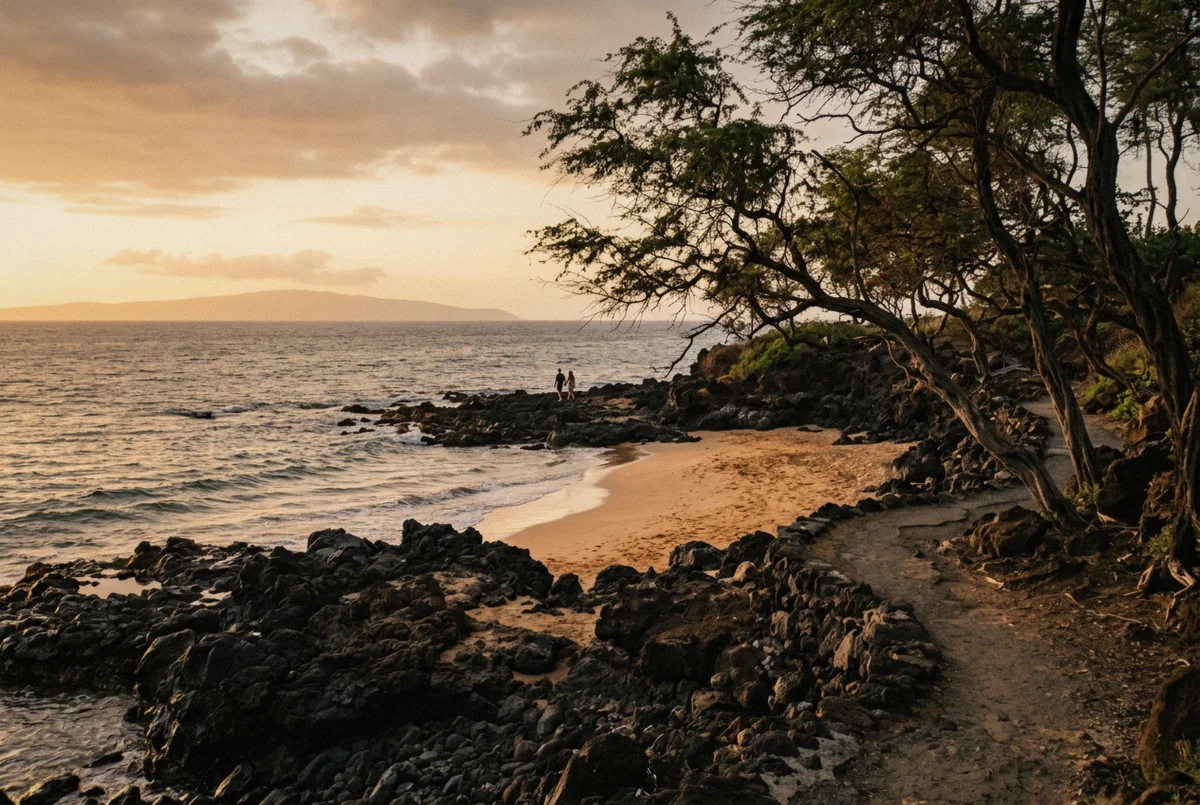
Lava backdrops invert the usual advice: this is where white and cream do their best work.
Fabric, Movement and the Trade Winds
Choose for movement, not for the mirror
A beach session in Hawaii is almost always windy, and the wind is an asset rather than a nuisance if what you are wearing responds to it. Long hems, loose sleeves, gauzy overlays and light jersey all move. Structured cotton, stiff denim and anything with a heavy lining stand still, which reads as stiff in a photograph even when you are not.
The practical test: hold the garment by the shoulders and shake it once. If the hem swings, it will photograph well at Lanikai.
What the wind does to hair, and what to do about it
The same breeze that lifts a hem lifts your hair into every frame. There are two working answers and one that fails. Wear it down and let it move, which suits loose waves and long lengths; or tie it back cleanly, which suits everything else. The failure mode is a soft half-up style that comes apart in the first ten minutes and looks unintentional in the last twenty.
If you are shooting at sunrise on the windward side, assume more wind than you planned for.
Water, sand and how much you actually want to get in
Decide before, not on the day. Sessions where somebody walks into the shore break produce the best frames of the set and ruin any fabric that goes translucent or clings unhelpfully when wet. Bring a second outfit if the listing gives you an hour; on the 30-minute options there is no time to change, so pick the one you are willing to soak.
Shoes
Every listing that mentions footwear says the same thing: something you can walk on sand in. Photographers routinely carry your sandals while you go barefoot for the frames, so the shoes matter less for the photographs than for the walk between the car park and the spot, which at Lanikai is a path between houses and at Waimea a flight of steps.
Dressing for the Season, and for the Hour
Hawaii's temperature barely moves, so the calendar changes almost nothing about what you wear. The hour changes a great deal.
| Months | Day highs | What it means for clothes | Watch for |
|---|---|---|---|
| May to September | 29 to 31C | Lightest fabrics, minimal layers, sunrise starts are mild | Strong sun by 9am, and glare off white sand |
| October and April | 30C | Shoulder months, same clothes, fewer people in frame | Occasional showers, which pass |
| November to March | 27 to 29C | A light layer for early starts, especially windward | Rain in short bursts, and north-shore wind |
| Any month, sunrise | Coolest hour | Bring something over the shoulders for the wait | Wet sand and dew on the walk in |
| Any month, sunset | Warmest hour | Nothing extra, but light fades fast after | Mosquitoes near vegetation at dusk |
Why the season matters less than you think
Day highs in Honolulu run between about 27 and 31 degrees all year, which is a narrower band than most visitors expect. What actually changes is rain frequency and swell, not temperature, so the wardrobe question is settled by the hour of your booking and the colour of the sand rather than by the month printed on the ticket.
The one seasonal exception is the north shore in winter, where wind and spray are strong enough that anything unsecured, hats especially, will end up in the water.
Hats, jewellery and the small stuff
A woven hat is the one accessory that always works here, and the one that blows off most often; hold it rather than wearing it in wind. Keep jewellery to one piece that means something. Take hair ties off wrists, they show in every close frame.
And if you are wearing a watch you would not wear in a wedding photograph, take it off before the session rather than editing it out afterwards.
What to Leave in the Case
Shorter than the list of what to bring, and it saves more frames.
The four things that fight the photograph
Large logos and slogan tees date the picture and pull the eye. Busy small-scale prints turn to visual noise at any distance beyond a metre. Neon reflects onto skin, which no amount of editing fixes cleanly.
And sunglasses on a face hide the thing the photograph is about, so keep them on your head or in a pocket for the frames that matter.
- Logos, slogans and branded sportswear
- Busy small prints, especially florals under a metre of frame
- Neon, which casts colour onto faces
- Sunglasses in every shot
The one that surprises people
New clothes bought for the session. They photograph as new: creases from the packaging, stiffness in the fabric, and the particular self-consciousness of somebody wearing something for the first time. If you buy something for the shoot, wear it once beforehand, ideally on a warm evening near water.
Dressing for Your Session
If you booked a sunrise slot on the windward coast
warm neutrals, a layer you can drop, and hair tied or fully loose. It is genuinely cool at six on that side
If you booked a west-coast sunset
flowing and light, in anything warm-toned. The sunset specialist shoots into the sun, so silhouettes reward shape over colour
If you are photographing a whole family
two or three tones, one accent, and clothes the children have already worn. The group session covers up to fifteen people, and fifteen new outfits is a bad plan
If you booked 30 minutes
one outfit, chosen for the backdrop, and no change of clothes in the schedule
If you are pregnant
a fitted bodice with a loose long skirt reads best; the maternity guide covers the rest, including the heat
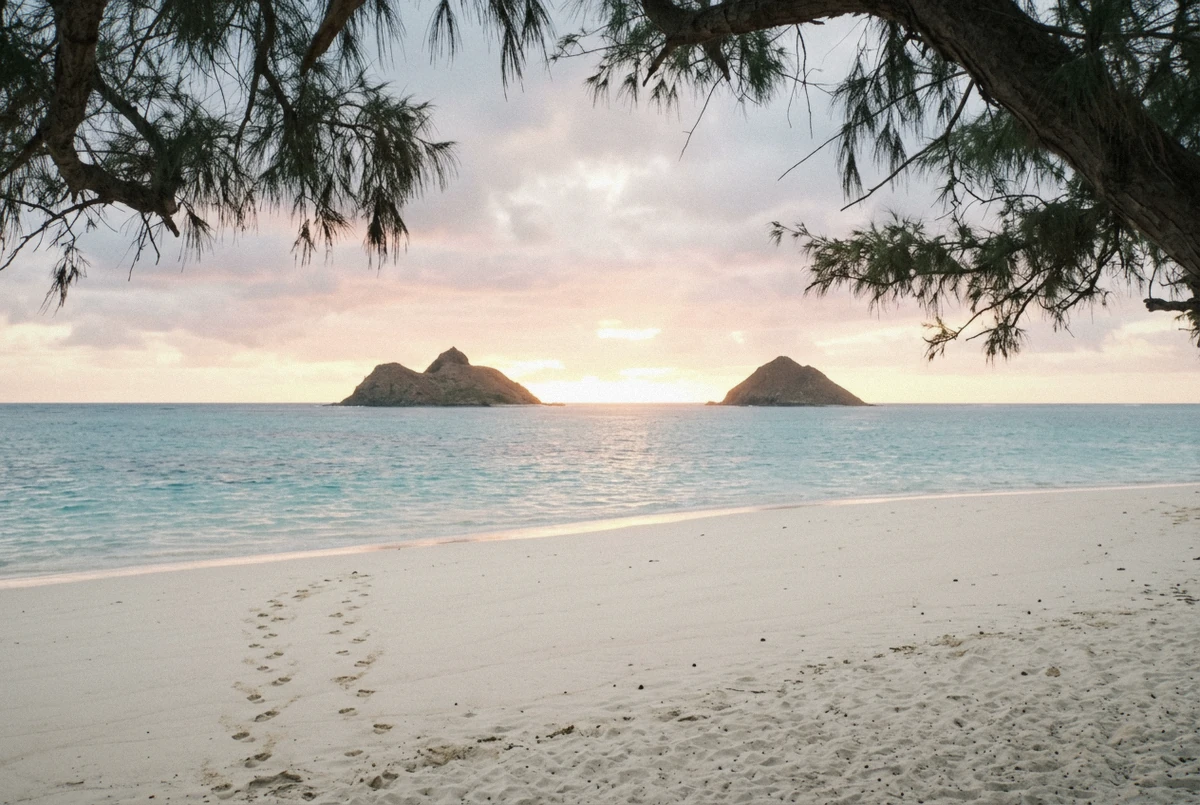
White sand, white water, white dress: three things at the same tone and none of them separate.
The Night-Before Checklist
Run this the evening before the session
Ten minutes with the outfit laid out saves the frames you would otherwise spend fixing things.
- Outfits laid out, tried on, and checked against the backdrop colour table above
- Anything new worn once already
- Second outfit packed if the booking is an hour, skipped if it is 30 minutes
- Footwear you can cross soft sand in
- A layer for a sunrise start on the windward or north coast
- Hair decision made: down and moving, or tied back cleanly
- Sunscreen applied early enough not to look freshly applied, and rubbed in fully
- Phone, keys and wallet consolidated into one bag somebody can hold out of frame
- Meeting point confirmed with the photographer, and the drive time checked
On the day itself
Arrive a few minutes early, drink water, and give yourself the walk from the car to the sand to settle. Every photographer in these listings says some version of the same thing: the first five minutes are the stiffest, and they get easier once nobody is thinking about the clothes any more. That is the point of doing all the deciding the night before.
What to Wear Questions
What are the best colours to wear for family photos in Hawaii?
Warm neutrals and mid-tones against white sand: sand, terracotta, rust, deep teal, navy. Against black lava, flip it and wear white, cream or coral. Coordinate two or three tones across the family and let one person carry an accent colour rather than matching everybody.
What not to wear for a photo shoot?
Large logos, busy small prints, neon, brand-new clothes still creased from the packaging, and sunglasses in every frame. On white sand, add white to that list; on lava, add black.
How do you dress in Hawaii and not look like a tourist?
Loose natural fabrics in plain colours, and one thing that suits the place rather than performing it. A well-made aloha shirt in a muted print reads as local; a matching family set in bright hibiscus does not. Locals dress for heat and salt, not for a theme.
Should the whole group match?
No. Matching outfits photograph as a uniform. Pick a palette of two or three tones drawn from the backdrop, vary the garments within it, and give one person an accent. The couples and families session takes up to fifteen people, which makes a palette far easier than a dress code.
Can I change outfits during the session?
On an hour, usually yes if you ask when the photographer calls to agree the meeting point. On a 30-minute booking, no. There is rarely anywhere to change on a Hawaiian beach, so a wrap over a swimsuit is the practical version of a second look.
What should I wear if we are getting in the water?
Something you are happy to soak, in a fabric that does not go transparent when wet. Cotton gauze and jersey behave; thin white linen does not. Tell the photographer in advance so the water frames come at the end rather than the middle.